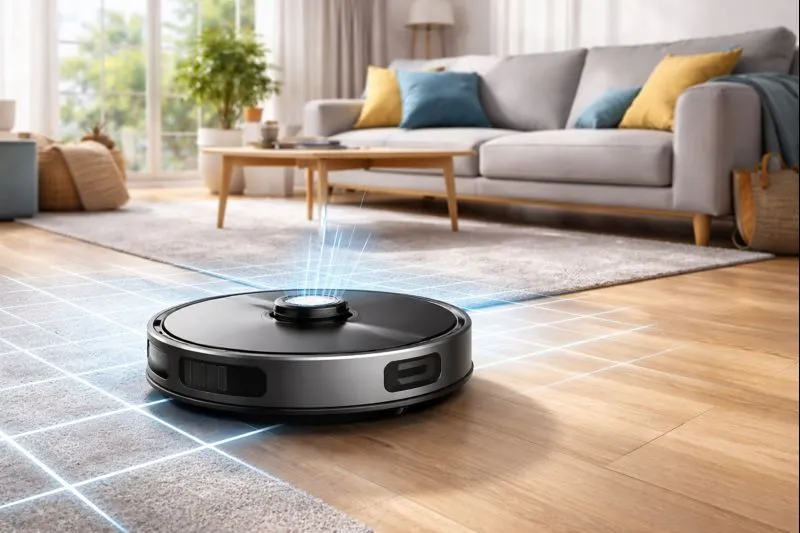
What “best” actually means (and why it depends on your home)
Let’s be honest: the best robot vacuum cleaner isn’t a single magical model that makes your floors sparkle while you sip tea like royalty. “Best” really means: best for your floors, your mess, your pets, and your patience level.
A studio flat with mostly laminate needs a very different robot vacuum cleaner than a busy family home with deep carpets, a Labrador, and the kind of crumbs that appear even when nobody remembers eating.
So instead of pretending there’s one champion robot hoover, we’ll do this properly:
- I’ll break down the categories that actually matter.
- I’ll show you which features are worth paying for (and which are basically fancy confetti).
- And I’ll give you a super practical checklist you can use today.
Along the way, I’ll reference independent testing and reputable guidance so you’re not buying based on vibes alone. Which?+2Reviewed+2
Quick shortlist: today’s standout robot vacuum types
Vacuum only vs robot vacuum and mop
A vacuum only bot is like a reliable commuter train: it does one job, repeatedly, and that repetition is the magic. A robot vacuum and mop is more like a Swiss Army knife: amazing if you actually need the extra tool.
Modern hybrids can be genuinely impressive, especially those with better mopping systems and smarter docks that wash and dry pads. eufy+2TechRadar+2
Budget robot vacuum vs premium robot vacuum
A budget robot vacuum can keep daily dust under control, but it usually needs more babysitting:
- smaller bins
- weaker obstacle avoidance
- simpler mapping
Where a premium robot vacuum is built for “set it and forget it” living: better navigation, better docks, better mopping, fewer tantrums. TechRadar+2TechRadar+2
Self-emptying robot vacuum vs manual emptying
A self-emptying robot vacuum with an auto empty dock is the difference between:
- “This is fun automation!” and…
- “Why am I emptying a tiny bin every other day?”
If you’ve got pets or long hair, self-emptying shifts the whole experience from chore to convenience. iRobot+2eufy+2
Our top picks by need (real world categories)
Think of this as a “choose your character” screen. No single option is perfect, each is optimised for a different kind of home.
Best all rounder for most homes
If you want that sweet spot of strong vacuuming, capable mopping, and reliable day-to-day automation, look at models that reviewers consistently rate as top all rounders. For example, TechRadar’s current “best robot vacuum” pick highlights Roborock’s top-tier performance and reliability in testing. TechRadar
Why it wins the “most people” category:
- strong mapping robot vacuum behaviour (consistent navigation)
- solid pickup across mixed floors
- modern dock automation (depending on model)
Best for mopping-heavy homes (kitchen tiles, hard floors)
If your home is mostly hard floors and you actually care about mopping (not just “wet wipe and pray”), focus on systems with:
- dual spinning pads or active scrubbing
- good carpet detection + mop lifting
- dock-based mop pad washing + drying
Eufy’s Omni line is often praised for impressive mopping at a more “sane” price point, and their product pages detail the dual pad approach plus mop lift for carpets. eufy+1
Best for pet hair and carpets
For a true pet hair robot vacuum, you want three things:
- a brush system that doesn’t become a hairy baguette
- strong carpet pickup (not just high Pa numbers)
- reliable bin management (self-empty helps a lot)
Independent review/testing outlets often break down these performance differences more usefully than spec sheets. RTINGS.com+2Vacuum Wars+2
Best low-maintenance option (maximum hands-free)
If your dream is “I don’t want to think about floor cleaning for weeks,” prioritise:
- self-emptying dock
- auto water refilling (where available)
- dock-based pad washing + hot air drying
- decent obstacle avoidance
iRobot’s Combo j9+ is a well-known example of a dock that empties debris and refills liquid, aiming for longer hands-free periods. iRobot+1
Best budget robot vacuum (still worth owning)
If your goal is simply to keep daily dust and crumbs under control without spending a fortune, TechRadar’s budget list is a good starting point, especially for UK-available value picks like Xiaomi/Roborock budget models. TechRadar+1
Realistic expectation: it won’t deep clean like a full size vacuum, but it will reduce the frequency you need to do it.
The 9 features that matter (and the 3 that are mostly marketing)
Navigation: LiDAR navigation vs camera based mapping
A good mapping robot vacuum feels like it has a plan. A bad one looks like it’s reenacting a confused bumblebee.
- LiDAR navigation (laser mapping) is usually excellent for fast, accurate maps and consistent route planning.
- Camera-based systems can be great at recognising obstacles, but lighting and clutter can affect performance.
Different reviewers test navigation and mapping reliability in repeatable ways, worth leaning on. Reviewed+2RTINGS.com+2
Why multi-floor mapping matters in UK homes
Lots of UK homes have stairs, mixed flooring, and rooms that aren’t laid out like a modern open-plan showroom. Multi floor mapping means the robot can remember upstairs vs downstairs without you doing a tech support ritual every time you move it.
Obstacle avoidance: socks, cables, and LEGO-proofing your life
If you’ve ever watched a robot vacuum eat a phone charger like spaghetti… you already know why obstacle avoidance matters.
Modern bots use sensors + cameras/AI to avoid common hazards (cables, shoes, pet “surprises”). Some brands even emphasise privacy and security standards alongside obstacle recognition. eufy+1
Suction power (Pa): how much is “enough”?
Here’s the truth nobody tells you: suction power (Pa) is useful, but it’s not the whole story.
Tech reviewers note that manufacturers keep pushing Pa numbers higher, but real world cleaning depends on the full design: brush system, airflow path, how well it seals to the floor, and how smartly it navigates. TechRadar+1
Rule of thumb: look for a robot that’s well reviewed for pickup, not one that just shouts the biggest number on the box.
Brushes for hair: anti tangle designs and why they save your sanity
If you have pets or long hair, anti-tangle matters more than almost anything else. Some models market dedicated detangling comb systems to reduce manual cleanup. eufy+1
Edge cleaning and corners: the robot’s “nemesis”
Robots are round. Corners are not. That’s the whole drama.
Look for:
- good side brush design
- edge-following behaviour
- (premium) extending side brushes or edge focused mopping
Some manufacturer pages even quantify edge performance claims, though independent tests are still the gold standard. Roborock Global Official Store+1
Mopping: mop lifting, pad washing, and what “scrubbing” really means
Basic mopping = a damp cloth dragged around.
Better mopping = pressure + rotation/vibration + stain targeting.
If you want floors that look actually cleaned:
- prioritise mop lifting (carpet detection) so rugs don’t get soaked
- consider docks with mop pad washing and drying (less smell, less mouldy pad misery) eufy+2The Verge+2
App control, scheduling, and voice control (Alexa / Google Assistant)
A good robot should let you:
- set scheduled cleaning
- choose rooms
- set suction/mop intensity per room
- save no-go zones
- start/stop via voice control (Alexa / Google Assistant)
In reality, app control is where “premium” often shows up, more stable maps, fewer glitches, better room-by-room customisation. Which?+1
HEPA filter + allergies: what to look for
If allergies matter in your household, filtration matters.
Reputable health guidance often recommends high-filtration vacuuming (including HEPA-capable systems) as part of dust-mite and allergen management. Cambridge University Hospitals+2Allergy UK | National Charity+2
Also worth checking:
- sealed systems (so fine dust doesn’t leak back out)
- availability and cost of replacement filters
- whether the model (or brand) appears in recognised allergy related approved product lists Allergy UK | National Charity
Running costs, noise level, and battery life (the practical stuff)
Running costs / electricity use
Good news: vacuuming typically isn’t one of the biggest electricity hogs in a home. Guidance on appliance consumption often places far bigger emphasis on “wet appliances” and heating-related usage. Energy Saving Trust+1
A simple way to estimate your robot’s cost per clean:
- find the charger’s power draw (or the dock rating)
- estimate runtime per clean
- multiply by your electricity unit rate
If you want a quick broader reference for how household appliance running costs are calculated, National Energy Action explains the basics (power rating × time × unit cost). National Energy Action (NEA)+1
Noise level
Robots are usually quieter than uprights, but “quiet” depends on mode:
- eco mode: background hum
- turbo/max: more like a persistent hairdryer’s shy cousin
If you’re noise sensitive or work from home, scheduling becomes your best friend (run it when you’re out, or during a meeting you don’t like).
Battery life / runtime
Most bots can handle typical flats and medium homes on one charge, but bigger homes and deep carpet can force recharge and resume cycles. The key isn’t just battery size it’s whether the robot returns, recharges, and continues reliably.
A simple checklist before you buy
Use this like you’re inspecting a used car (but with less grease and fewer lies).
| Your home situation | What to prioritise | Keywords covered |
|---|---|---|
| Mostly hard floors | strong mopping + pad washing dock | robot vacuum and mop, mop pad washing, self-cleaning dock |
| Lots of carpet | brush + carpet pickup + carpet boost | carpet boost, suction power (Pa) |
| Pets / long hair | anti-tangle brush + self-emptying | pet hair robot vacuum, self-emptying robot vacuum |
| Clutter (toys/cables) | obstacle avoidance | obstacle avoidance |
| Multi-storey home | multi-floor mapping | multi-floor mapping, mapping robot vacuum |
| Allergies | HEPA filter + good sealing | HEPA filter |
| You hate maintenance | auto-empty dock + easy parts | auto-empty dock, spare parts, robot vacuum maintenance |
| You want cheap & cheerful | solid budget model + basic mapping | budget robot vacuum |
Setup tips: get better cleaning in the first 48 hours
Map once, clean forever (mostly)
Do one “proper” mapping run early:
- lights on
- doors open (for the rooms you want included)
- pick up obvious cable traps
A clean first map is like giving your robot a good mental model of the house. A messy first map is like giving it a treasure map drawn on a napkin in the rain.
No-go zones / virtual walls: where they actually help
No-go zones / virtual walls aren’t just for drama. They’re perfect for:
- pet bowls
- kids’ LEGO zones
- delicate rug edges
- cables behind TV stands
Once you set them, the robot stops “learning the hard way.”
Robot vacuum maintenance: the 10 minute weekly routine
Yes, you bought a robot so you wouldn’t have chores. This is the tiny exception that keeps it working like new.
Weekly (10 minutes)
- empty bin (or check dock bag/bin)
- wipe sensors
- clean hair from brush ends
- quick check of side brush
Monthly
- wash/replace filters as recommended
- check wheels for trapped hair
This basic upkeep aligns with how review labs often evaluate long-term usability: performance drops fast if airflow and brushes clog. Reviewed+1
Common mistakes (that make people think robot hoovers “don’t work”)
- Running it once a week
Robot hoovers shine when they clean often. Think “toothbrush,” not “spring clean.” - Letting clutter win
If the floor is an obstacle course, even the best obstacle avoidance will have a bad day. - Expecting miracles on thick carpet
Robots are brilliant for maintenance cleaning, but deep carpet still sometimes needs a full-size vacuum assist. Independent reviewers frequently make this point in performance breakdowns. TechRadar+1 - Ignoring brushes and filters
A clogged filter turns your powerful robot into a polite fan.
The best robot vacuum UK pick for you isn’t about chasing the flashiest spec sheet, it’s about matching the robot to your real life. If you’ve got pets, prioritise anti-tangle + a self-emptying robot vacuum. If you live on hard floors, choose a robot vacuum and mop with proper pad washing and mop lifting. And if you’re on a budget, a well-chosen budget robot vacuum can still be a game changer because consistency beats occasional perfection.
Bottom line? Pick a bot that you’ll actually run every day, and your floors will quietly improve in the background… like a good habit you didn’t have to build yourself.
FAQ
Are robot vacuum cleaners actually worth it?
If you want cleaner floors with less effort, yes—especially for day-to-day dust, crumbs, and pet hair. The big win is frequency: robots can run little-and-often, which keeps dirt from building up. Independent buying guides also point out that performance varies a lot by model, so the “worth it” part depends on choosing one that suits your floors and layout. Which?+1
How much suction power (Pa) do I need in a robot vacuum?
Enough to clean effectively on your floors—but don’t obsess over the biggest number. Reviewers note that Pa figures keep rising, yet real-world results depend on brush design, airflow, and navigation strategy, not just raw suction. As a practical approach: use Pa as a rough filter, then rely on trusted reviews that test pickup on carpet and hard floors. TechRadar+2Vacuum Wars+2
Do robot vacuum and mop combos replace real mopping?
Sometimes… but not always. The best hybrids can maintain clean-looking hard floors, especially models with active scrubbing and docks that wash/dry pads. But if you’re dealing with sticky spills, heavy grease, or you want a “deep mop,” you may still do an occasional manual mop. The combo works best as maintenance that prevents grime from ever settling in. The Verge+2eufy+2
What’s the difference between LiDAR navigation and camera-based mapping?
LiDAR navigation usually excels at fast, accurate mapping and consistent room-to-room routes. Camera-based systems can be strong for recognising obstacles (like cables and shoes), but may be more dependent on lighting and object recognition. Many premium models blend sensors for better reliability, and review labs specifically test navigation and obstacle avoidance because it’s a major real-world differentiator. Reviewed+2RTINGS.com+2
Are robot vacuums good for allergies and dust mites?
They can help, especially if you run them frequently and use good filtration. Health guidance for dust-mite allergy management often recommends high filtration vacuuming (including HEPA capable systems) as part of reducing allergen exposure, alongside other habits like regular washing and damp dusting. For allergy-focused households, prioritise a HEPA filter and good sealing, plus consistent cleaning schedules.