
UK Energy Bill Guide 2026
Use this Electricity Cost Calculator UK to estimate how much it costs to run household appliances, including tumble dryers, washing machines, dishwashers, electric heaters, air fryers, kettles, televisions and fridge-freezers.
This electricity cost calculator UK is designed for quick appliance-level estimates, not whole-home bill forecasting.
Quick Answer
The cost of running an electrical appliance depends on appliance wattage, usage time and your electricity unit rate.
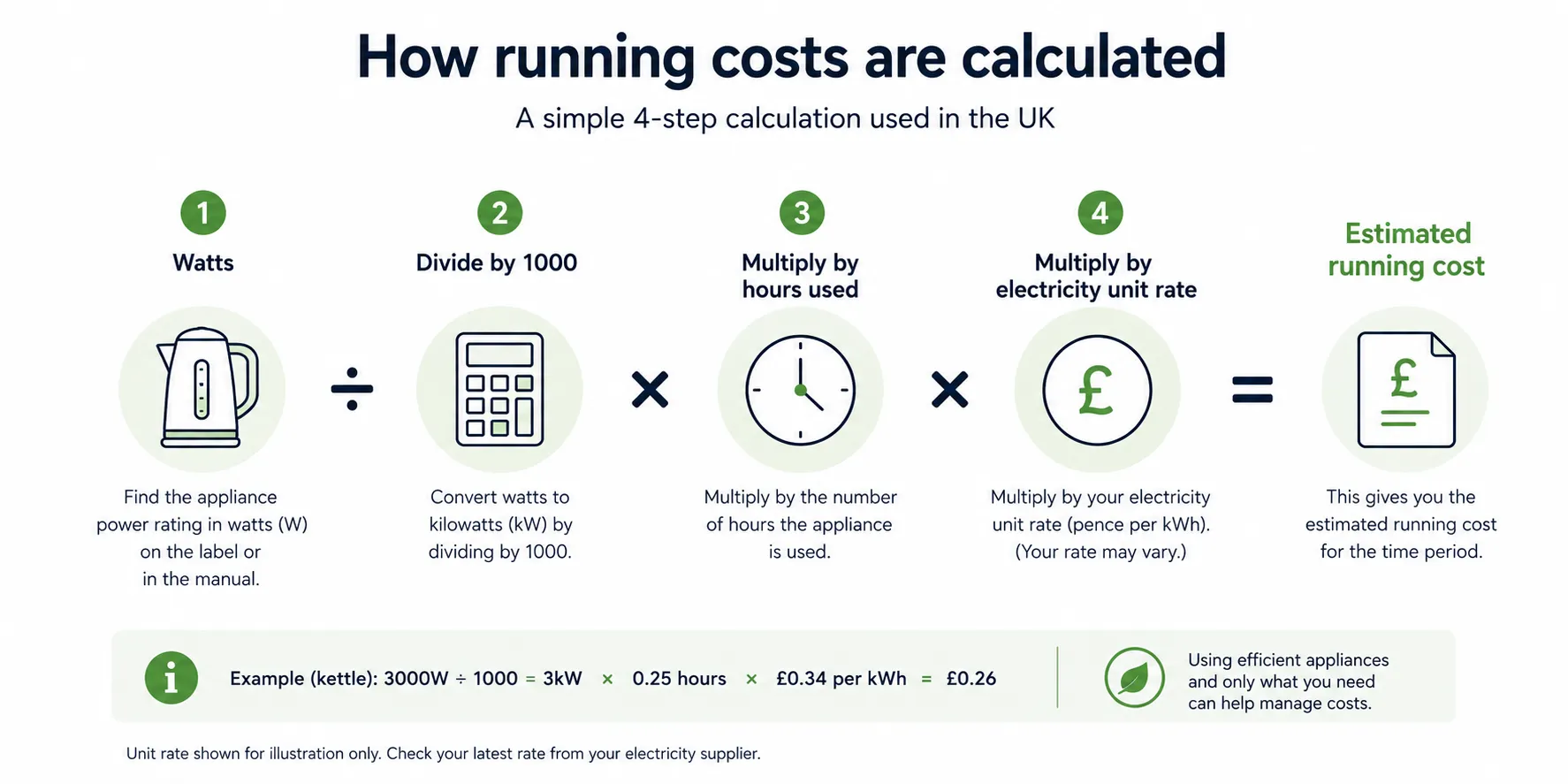
Formula: Watts ÷ 1,000 × hours used × electricity unit rate = estimated running cost.
For example, a 2,000W appliance running for one hour uses 2kWh of electricity. At 26.32p/kWh, that costs approximately £0.53.
Before You Use The Calculator
- Find the appliance wattage.
- Estimate daily usage.
- Check your electricity tariff.
- Enter your figures.
- Compare costs.
Even small differences in usage time can have a significant impact on annual electricity costs.
Electricity Cost Calculator UK
Use the electricity cost calculator UK below to estimate running costs from watts, daily usage and your electricity unit rate.
Reference rate: This calculator uses 26.32p/kWh by default, based on Ofgem’s October–December 2026 electricity price cap reference for Direct Debit customers in England, Scotland and Wales. Ofgem’s published electricity rate for this period excludes VAT because VAT has been removed from electricity bills from 1 October 2026 to 31 March 2027. Use your own electricity unit rate from your bill for the most accurate result.
For the most accurate result, enter the electricity unit rate from your own tariff or energy bill.
Rate checked: October 2026. Ofgem’s next price cap announcement is scheduled for 25 November 2026, covering 1 January to 31 March 2027.
Estimated running costs
Standing charge is not included because it is a fixed daily supply cost, not a cost caused by running one specific appliance.
How Accurate Is This Electricity Cost Calculator?
This calculator provides estimated running costs based on the information you enter. Actual electricity consumption can vary because of appliance efficiency, thermostat cycling, usage habits, electricity tariff, appliance age, maintenance condition, ambient temperature and home insulation quality.
Want more accurate appliance readings?
For real-world readings, a smart plug with energy monitoring or a home energy monitor may help you compare estimates against actual usage.
For a product-focused comparison, see our guide to best smart plugs UK.
How Electricity Costs Are Calculated
1. Convert watts to kilowatts
1,000W = 1kW.
2. Calculate electricity usage
2kW × 3 hours = 6kWh.
3. Apply your electricity rate
6kWh × £0.2632 = approximately £1.58.
| Appliance Power | Electricity Used Per Hour | Estimated Cost Per Hour |
|---|---|---|
| 500W | 0.5kWh | £0.13 |
| 1000W | 1kWh | £0.26 |
| 1500W | 1.5kWh | £0.39 |
| 2000W | 2kWh | £0.53 |
| 2500W | 2.5kWh | £0.66 |
| 3000W | 3kWh | £0.79 |
Watts vs kWh Explained
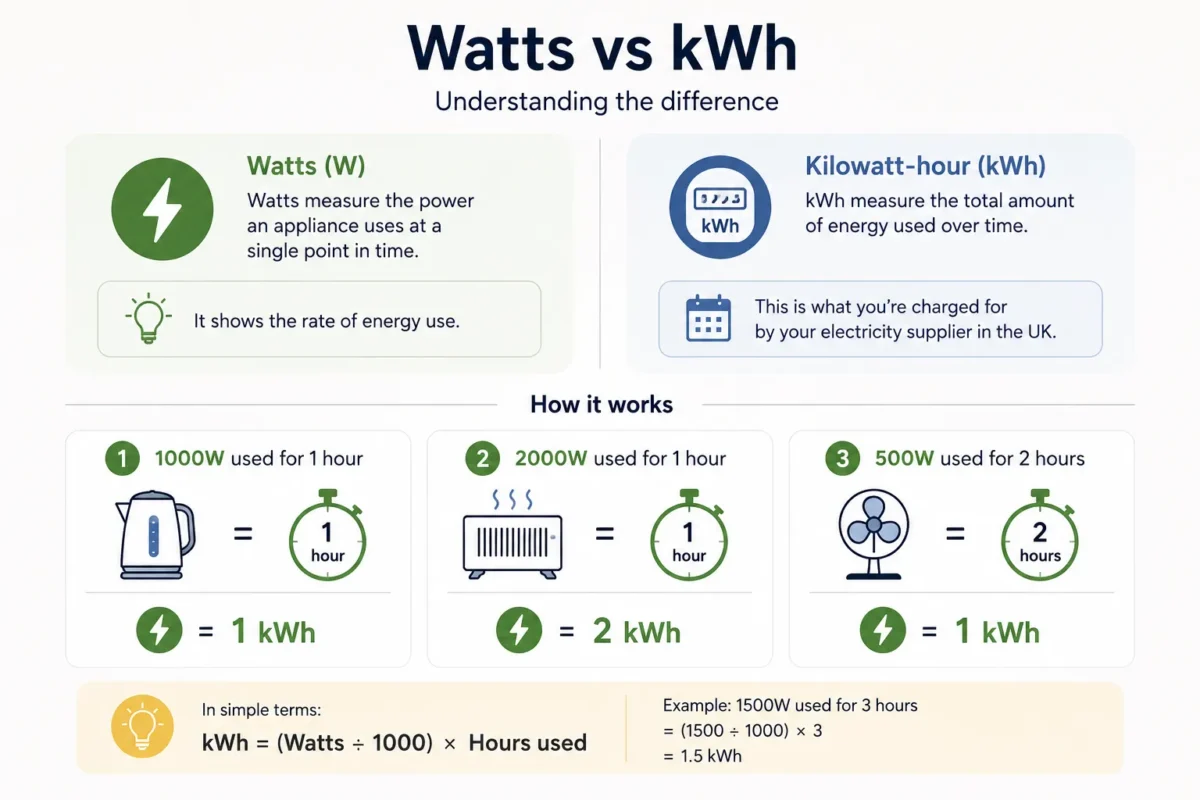
Watts measure power. kWh measures electricity consumption over time.
- 1000W used for one hour = 1kWh
- 2000W used for one hour = 2kWh
- 500W used for two hours = 1kWh
For a deeper explanation, use a dedicated kWh guide alongside this calculator so you understand both appliance wattage and electricity consumption over time.
Typical UK Appliance Running Costs
The figures below use a reference electricity rate of 26.32p/kWh and should be treated as estimates. Your actual cost depends on your own tariff, meter type, region and how long the appliance runs.
| Appliance | Typical Wattage | Approx. Cost Per Hour | Example Weekly Cost | Example Annual Cost |
|---|---|---|---|---|
| Tumble Dryer | 2500W | £0.66 | £4–£8 | £200–£400+ |
| Electric Shower | 8500W+ | £2.24+ | Usage dependent | Often significant |
| Dishwasher | 1800W | £0.47 | £2–£5 | £100–£250 |
| Washing Machine | 2000W | £0.53 | £2–£5 | £100–£250 |
| Fridge-Freezer | Variable | Low hourly cost | Continuous operation | £50–£150+ |
| Electric Heater | 2000W | £0.53 | £5–£15+ | Usage dependent |
| Air Fryer | 1500W | £0.39 | £1–£3 | £50–£150 |
| Kettle | 3000W | £0.79 while boiling | Usually low | Usually low |
| Television | 100W | £0.03 | Less than £1 | Low |
To compare appliance costs against whole-home consumption, keep this calculation focused on appliance-level running costs first. Best energy-saving devices UK can support wider device comparisons.
Which Appliances Cost The Most To Run In A UK Home?
The appliances that usually contribute most to electricity bills are those that generate heat, heat water, operate frequently or run for long periods.
- Electric heating appliances
- Tumble dryers
- Electric showers
- Dishwashers
- Washing machines
- Fridge-freezers
- Electric ovens
- Immersion heaters
For a full ranking, read our guide to what uses the most electricity in a UK home.
Which Costs More: Wattage or Usage Time?
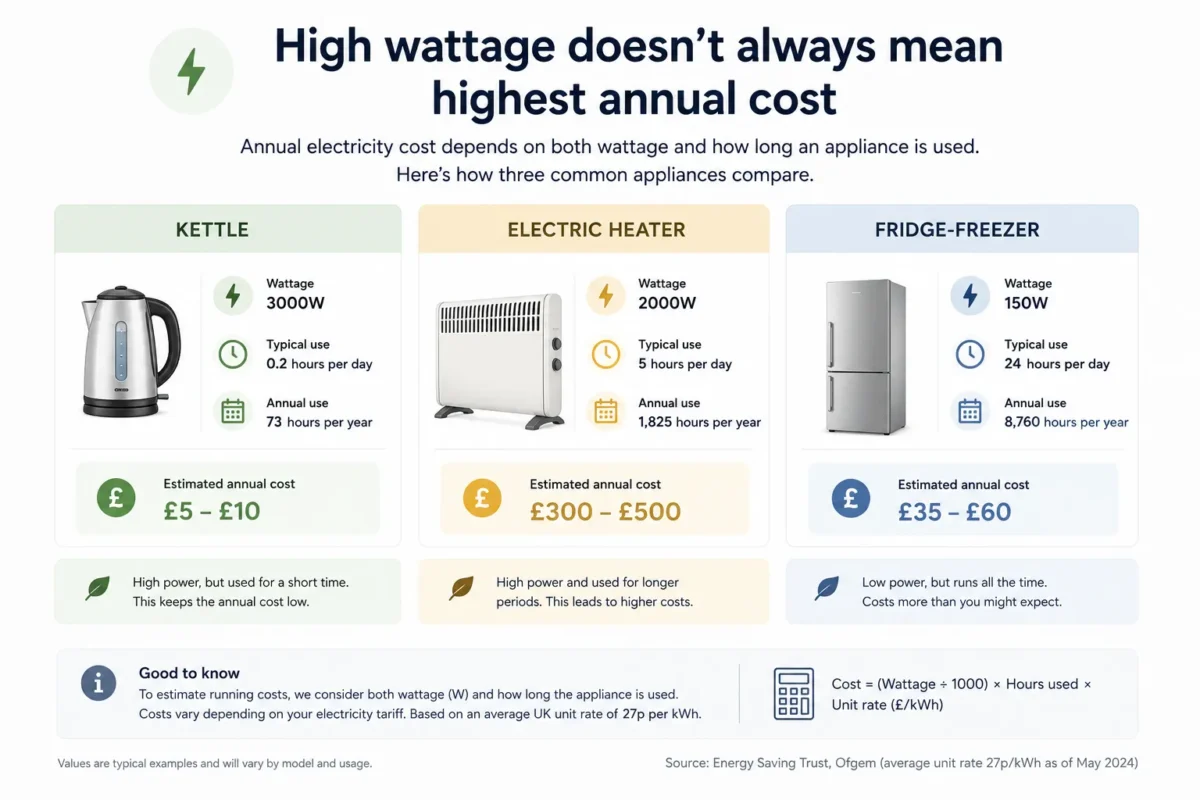
A higher-wattage appliance does not automatically create the highest annual electricity bill. Usage duration often matters just as much.
Real UK Examples
These examples use a reference electricity rate of 26.32p/kWh and are illustrative estimates only. Actual costs can vary depending on appliance efficiency, cycle length, thermostat behaviour and your own electricity tariff.
Tumble Dryer Example
A tumble dryer can vary significantly by model, load size and cycle type. Higher-energy cycles will cost more than shorter or lower-heat cycles.
Use the calculator above with the wattage or kWh figure from your own appliance label for a more reliable estimate.
Dishwasher Example
Dishwasher running costs depend on the programme, water heating, cycle duration and how often it is used.
For a realistic estimate, use the appliance’s energy label or manual together with your own electricity unit rate.
Fridge-Freezer Example
Fridge-freezer electricity use depends heavily on size, age, efficiency rating, room temperature and how well the door seals are working.
Because it runs continuously, even modest differences in efficiency can affect annual running costs.
Electric Heater Example
A 2kW electric heater running for three hours per day uses approximately 6kWh.
For heater-specific examples, use this appliance calculator as a general estimate and enter the heater wattage, daily usage time and your own electricity unit rate. For a dedicated tool, use our Electric Heater Running Cost Calculator UK.
Common Electricity Cost Calculation Mistakes
Confusing watts with kWh
Watts measure power. Electricity bills are based on kWh.
Ignoring usage time
A lower-power appliance used continuously can cost more than a high-power appliance used briefly.
Adding standing charges
Standing charges should not be included when calculating the cost of a specific appliance.
Using outdated rates
The most accurate calculations come from using your own tariff.
How To Reduce Electricity Costs
Reducing electricity costs starts with understanding which appliances consume the most electricity.
- Reduce unnecessary runtime
- Measure real electricity consumption
- Use appliances efficiently
- Improve insulation
- Review heating habits
- Reduce unnecessary standby power
Recommended next step
If you want to measure, control or reduce wasted electricity, focus first on identifying which appliances use the most energy in your own home. You can also browse the Energy Bills UK guides for bill, usage and running-cost context.
Best energy-saving devices UK can support broader device comparisons while this calculator remains focused on appliance-level running costs.
Sources
FAQs
How do I calculate electricity costs in the UK?
Multiply appliance power in kW by usage time and your electricity unit rate.
How much does 1kWh cost in the UK?
The default reference rate used in this calculator is 26.32p/kWh, based on Ofgem’s October–December 2026 average electricity price cap reference for Direct Debit customers in England, Scotland and Wales. Ofgem’s published electricity figure for this period excludes VAT. Your own unit rate may be different, so check your electricity bill for the most accurate figure.
What is this electricity cost calculator UK useful for?
This electricity cost calculator UK is useful for estimating the running cost of individual appliances, such as heaters, tumble dryers, kettles, air fryers, washing machines and televisions.
Does higher wattage always mean higher running costs?
No. Usage time is equally important.
Should I include the standing charge?
No. Standing charges are fixed supply costs and should be treated separately.
What appliance costs the most to run?
In many households, electric heating appliances, tumble dryers and electric showers are among the largest contributors.
Is a smart plug useful?
Yes. It can help measure actual electricity consumption rather than relying solely on estimates.
Why is my electricity bill higher than calculator estimates?
Actual costs depend on appliance efficiency, usage habits, tariff structure and total household consumption.
About AurumPick
AurumPick publishes UK-focused guides on home energy use, heating efficiency, appliance running costs and practical ways to reduce wasted electricity.
Need a different calculation? Visit the Calculators hub for AurumPick’s UK electricity and heating cost tools.