
Home Heating Efficiency UK
If one room in your home feels colder than the rest, the problem is not always the heater. Heat can escape through draughty windows, door gaps, cold floors, external walls, poor radiator placement or gaps around the room.
This guide explains how to check where a room is losing heat, what to fix first, which renter-friendly options may help, and when the issue may need a bigger repair or insulation improvement.
Quick Answer
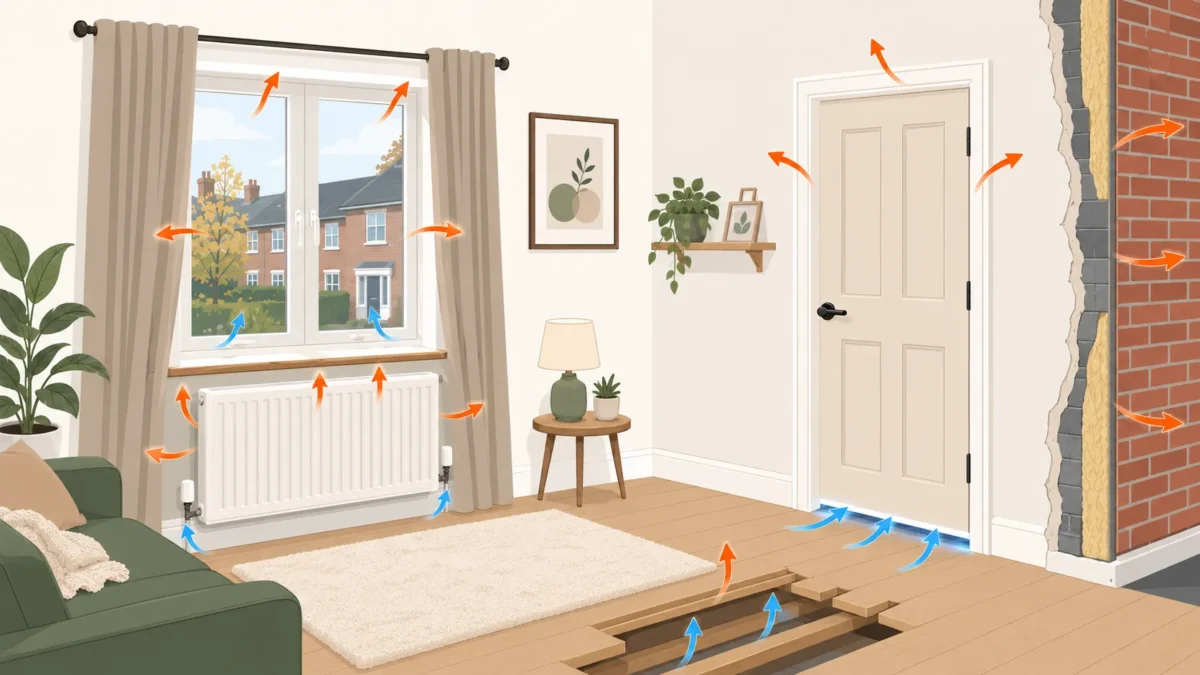
To stop heat loss in a room, start by checking for draughts around windows, doors, floorboards, skirting boards, fireplaces and loft hatches. If the room sits below an under-insulated roof space, check How Much Loft Insulation Do You Need in the UK?. Then improve heat retention with draught excluders, thermal curtains, rugs, radiator reflector panels and better furniture placement. If the room still loses heat quickly, the issue may be poor insulation, damp, ventilation or heating output.
Key Takeaways
- A cold room is often caused by draughts, weak insulation, poor radiator performance or heat escaping through windows, floors and doors.
- Fixing draughts should usually come before turning the heating up.
- Renters should focus on reversible fixes such as draught excluders, rugs, thermal curtains and removable window insulation film.
- Do not block required ventilation, air bricks or vents linked to gas appliances.
- If one room stays cold despite basic fixes, the issue may be structural or heating-system related.
Start Here: What Type of Cold Room Problem Do You Have?
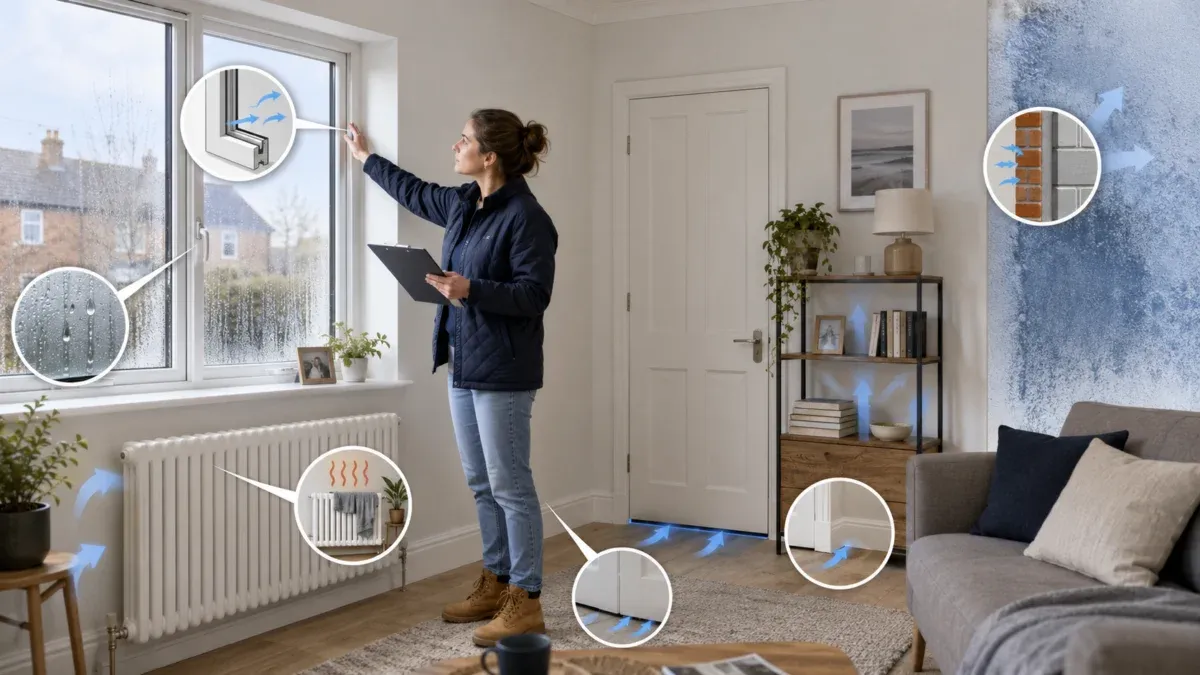
Before buying anything, identify the type of problem. A room that heats up but cools down quickly is different from a room that never gets warm in the first place.
| Your room problem | Most likely issue | Check first | Do not do this first |
|---|---|---|---|
| The room heats up but cools down quickly | Heat loss or poor heat retention | Windows, doors, floors and curtains | Buy a bigger heater |
| The room never gets properly warm | Heating output or circulation issue | Radiator, furniture position and thermostat | Seal random gaps only |
| You can feel cold air moving | Draughts | Door gaps, window frames and floor edges | Block required vents |
| The room feels damp and cold | Moisture or ventilation issue | Condensation, mould and airflow | Cover damp patches |
| One wall feels much colder | External wall or insulation issue | Wall temperature, mould and exposure | Place large furniture tightly against it |
Heat Loss vs Heating Problem: Know the Difference
If the room warms up but cools down soon after the heating turns off, the problem is likely heat retention. If the room never gets warm, the issue may be radiator size, heating output, blocked airflow or poor heating controls.
If the room feels cold and damp, moisture and ventilation may be part of the problem. Sealing draughts can help with comfort, but ventilation still matters.
Suggested next step: why one room loses heat quickly
Where Heat Escapes From in a Typical UK Room
Heat loss usually comes from several small weaknesses rather than one obvious fault. A cold window, a door gap, a draughty floor edge and a blocked radiator can combine to make one room feel much colder than the rest of the home.

| Area | What to check | Possible first fix |
|---|---|---|
| Windows | Draughts around frames, cold glass, thin curtains | Seal small gaps, close curtains earlier, consider thermal curtains |
| Doors | Cold air under or around the door | Use a draught excluder or door seal |
| Floors | Cold floorboards, gaps near skirting boards | Add a rug and check floor-edge draughts |
| Radiator | Blocked airflow, cold top, external wall location | Move furniture, bleed radiator if appropriate, review heat circulation |
| External wall | Cold surface, condensation or mould | Check ventilation and consider insulation advice |
| Chimney or vents | Cold air movement | Do not block required ventilation; seek advice if unsure |
Related guide: check where your room is losing heat
Best Low-Cost Ways to Keep Heat in a Room
The best low-cost fix depends on the source of the problem. Start with free checks, then use simple fixes that match the symptom.
| Fix | Try first if… | Renter-friendly? | Limitation |
|---|---|---|---|
| Draught excluder | Cold air comes under the door | Yes | Does not fix window or wall heat loss |
| Thermal curtains | Windows feel cold or the room cools at night | Yes | Less useful if they block radiator heat |
| Rug | The floor feels cold underfoot | Yes | Not a replacement for floor insulation |
| Window insulation film | Glazing feels cold and you need a temporary option | Usually | Does not repair damaged frames |
| Radiator reflector foil | Radiator sits on an external wall | Usually | Not a substitute for proper insulation [SOURCE NEEDED] |
Cost check: electric heater running cost calculator
How to Reduce Heat Loss Through Windows
Windows can make a room feel colder because glass and draughty frames allow heat to escape. Closing curtains before the room cools down, sealing suitable gaps and using lined curtains can help improve comfort.
For renters, removable options such as thermal curtains or temporary window film may be more practical than permanent upgrades. If the frame is damaged or seals have failed, report the issue or consider professional repair.
Optional comparison: thermal curtains for cold windows
How to Stop Heat Escaping Under Doors
A gap under a door can let warm air escape into a hallway, landing or colder area. A fabric draught excluder is usually the easiest way to test whether the gap is part of the problem.
If the room feels warmer after using a draught excluder, a more permanent brush strip or door seal may be worth considering.
Optional comparison: draught excluders for door gaps
Radiator Efficiency: Keeping Heat in the Room
A radiator can be hot but still fail to warm the room properly if furniture, curtains or poor airflow block the heat. Check whether a sofa, bed, desk or long curtain is stopping warm air from circulating.
If the radiator is cold at the top, it may need bleeding. If it is on an external wall, radiator reflector foil may help in some situations [SOURCE NEEDED], but it should not be treated as a cure for poor insulation.
Heating habits: best heater settings to save electricity
Optional comparison: radiator reflector foil for external walls
Renter-Friendly Ways to Keep Heat In
Renters often need reversible fixes that do not damage the property or require permanent changes. Focus on practical steps that improve comfort while keeping a record of bigger issues that should be reported.
| Problem | Renter-friendly fix | When to report it |
|---|---|---|
| Draught under door | Removable draught excluder | If the door is damaged or badly fitted |
| Cold window area | Thermal curtains or removable window film | If seals, frames or glazing are faulty |
| Cold floor | Rug or thicker floor covering | If there are major gaps or damp patches |
| Mould or condensation | Improve airflow and heating balance | Always report persistent damp or mould |
| Faulty heating | Check basic settings first | Report if radiators or heating controls do not work |
Should You Use an Electric Heater in a Room That Loses Heat?
An electric heater can make a cold room feel warmer, but it will not fix the reason the room is losing heat. If the room leaks heat quickly, the heater may need to run for longer, which can increase running costs.
Before relying on extra heating every day, check draughts, windows, doors, floors and radiator airflow. Then calculate the likely running cost using wattage, hours used and your electricity unit rate.
Calculate it: calculate how much extra heating could cost
Related guide: how to reduce electric heating costs
10-Minute Room Heat Loss Diagnosis
Use this quick process before spending money on products or running extra heating for longer.
- Stand near the window and feel around the frame, sill and curtain edges.
- Check whether cold air comes under or around the door.
- Feel near skirting boards and floorboards for draughts.
- Move furniture away from the radiator and check whether it heats evenly.
- Make sure curtains are not blocking radiator heat.
- Compare external walls with internal walls.
- Look for condensation, damp patches or mould.
- Identify vents, air bricks or fireplaces before blocking anything.
- Try one fix at a time so you know what actually helps.
- Calculate heating costs if you use an electric heater regularly.
What Not to Do When Trying to Keep a Room Warm
| Mistake | Why it can be a problem | Better approach |
|---|---|---|
| Blocking air bricks or required vents | Can reduce safe ventilation | Get advice before covering vents |
| Covering damp or mould with furniture | Can make moisture problems worse | Investigate and report the cause |
| Using an electric heater to mask heat loss | May increase running costs | Fix draughts and heat retention first |
| Hanging curtains over radiators | Can trap heat by the window | Keep radiator heat flowing into the room |
Important Safety Note
Do not block required ventilation, air bricks or vents linked to gas appliances, fireplaces or moisture control. Reducing unwanted draughts is not the same as removing necessary airflow. If you are unsure, get professional advice.
What to Do Next
If the room feels cold because of draughts, start with windows, doors and floor edges; for a cold timber or solid floor, use How to Stop Cold Floors in the UK. If the room feels cold because of surfaces, look at curtains, rugs and insulation. If the room needs extra electric heating, calculate the running cost before using it for long periods.
Check your heating cost
Estimate what extra heating could cost based on wattage, hours and unit rate.
Use the electric heater running cost calculatorImprove your heating setup
Learn how heating habits and room setup can affect electricity use.
Compare average electricity usage in the UKExplore the wider guide
Follow the full cluster for room-by-room heating efficiency.
Read the home heating efficiency guideFAQs
Why does my room lose heat so quickly?
A room may lose heat quickly because of draughty windows, gaps under doors, cold floors, external walls, poor insulation, blocked radiators or ventilation issues. If the room warms up but cools down soon after the heating turns off, heat retention is likely the main problem.
What is the cheapest way to stop heat loss in a room?
Start with free checks before buying anything. Close internal doors, move furniture away from radiators, close curtains earlier and check for draughts around windows, doors and floor edges. Low-cost fixes can include draught excluders, rugs, thermal curtains and removable window film.
How do I stop heat escaping under a door?
Check whether cold air is coming under or around the door. A fabric draught excluder, brush strip or rubber door seal can help reduce unwanted draughts. For renters, removable draught excluders are usually the easiest first step.
Do thermal curtains help keep heat in?
Thermal curtains can help reduce the cold feeling around windows when they fit well and are closed before the room cools down. They work best when they cover the window properly without blocking heat from a radiator.
Should I use an electric heater in a room that loses heat?
An electric heater can warm a cold room, but it does not fix the reason the room is losing heat. If the room leaks heat quickly, the heater may need to run for longer, so it is sensible to check draughts and calculate running costs first.
Can sealing draughts cause condensation?
Sealing unwanted draughts can make a room feel warmer, but ventilation is still important. Do not block required vents, air bricks or ventilation linked to appliances. If condensation or mould is present, the room may need better airflow as well as heat retention.
Disclosure
AurumPick may earn a commission if you choose to buy through some links in future product guides. This does not affect the editorial advice in this article. This guide is designed to help you diagnose heat loss first and choose only the fixes that match your situation.